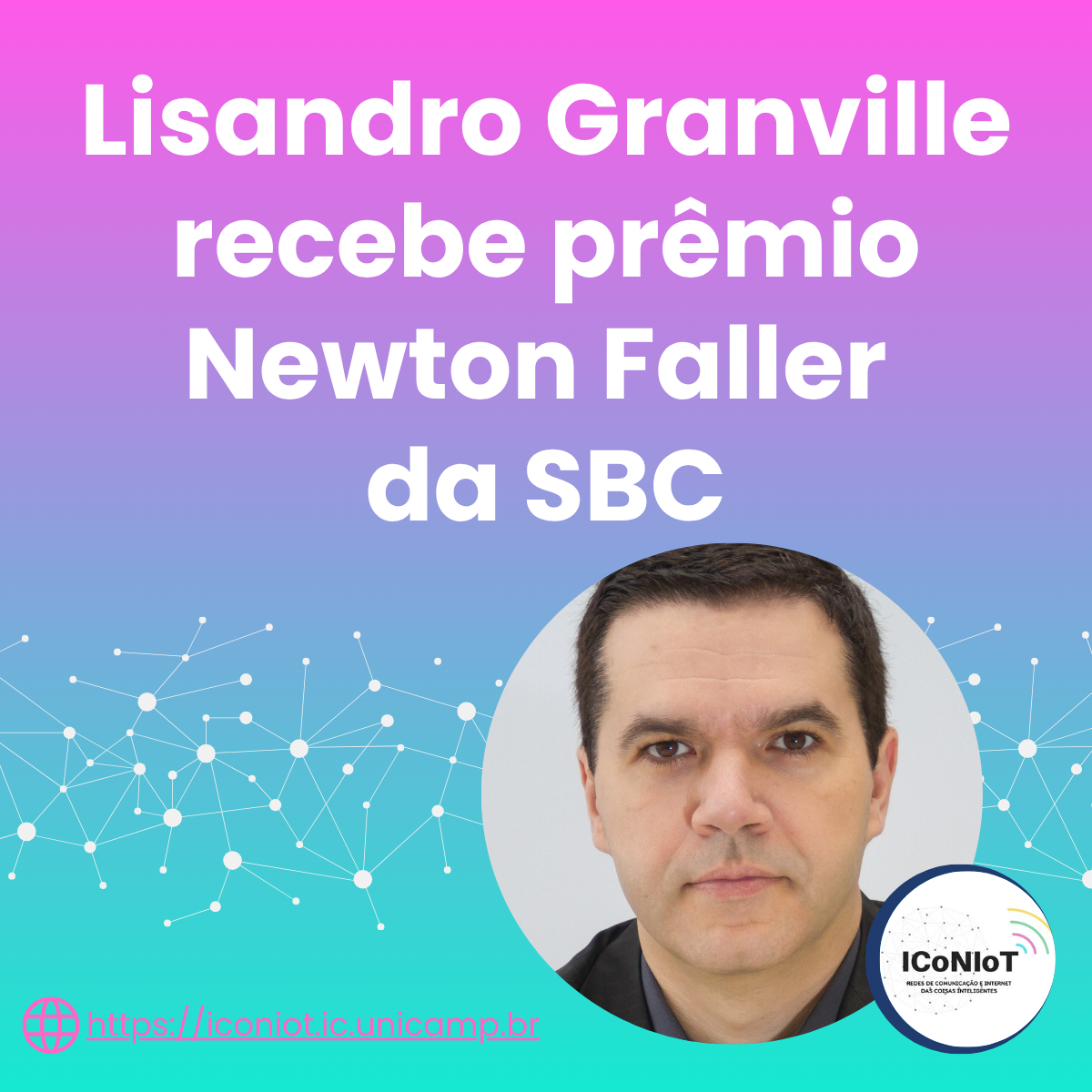
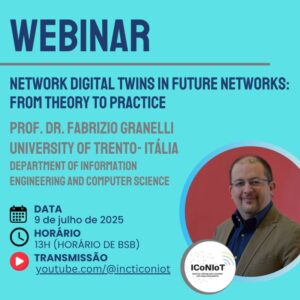
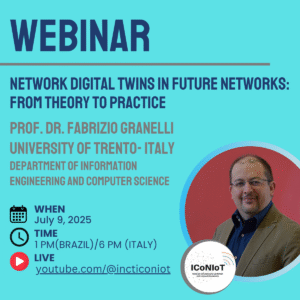
Researcher Dr. Granelli answered questions about the topics he will address in his presentation on July 9

In your perspective, what are the main possibilities of using Network Digital Twins and what is the importance of this research field for advancing IoT and communication networks?
Digital Twins in general represent a technology that is based on advanced IoT, as sensors are required in order to maintain the accuracy in the digital representation of a real object or device. Network Digital Twins (e.g. Digital Twins of Networks) are a key technology to implement automation, as their presence allows network management algorithms to perform tests on the virtual version of the network before applying those actions to the actual network infrastructure, thus improving the quality of the actions.
Which would be the risks or limitations (or the advantages) of using Network Digital Twins in future networks, particularly regarding data security and privacy?
Two main limitations:
– Computational overhead/ potential higher energy consumption, due to the presence and complexity of handling Network Digital Twins;
– Data security and privacy, since data exchange is required between the physical and the digital twin
However, both limitations can be addressed, but they represent current challenges.
Could you share some examples of specific areas or applications where Network Digital Twins have already shown concrete impact or disruptive potential, beyond traditional communications scenarios?
I will present some of those in the lecture:
– NDTs for security, e.g. using NDTs to predict and analyze (potential) security threats. A quick and effective answer is necessary.
– NDTs for energy optimization. NDTs can include measurements of energy consumption from the actual networks, thus enabling to take “informed” decisions when we want to reduce or optimize energy consumption.
What are the possibilities you would mention on the integration between Network Digital Twins and other emerging technologies, such as Artificial Intelligence and 6G? Which synergies do you find most promising?
Both are possible:
– NDTs & 6G are quickly becoming a reality, as NDTs are being introduced in standards from 3GPP and ETSI.
– NDTs & AI represent another interesting couple. For example, NDTs can be used to train ML/AI by offering realistic data and enabling to design scenarios that might be very rare or even hypothetica.
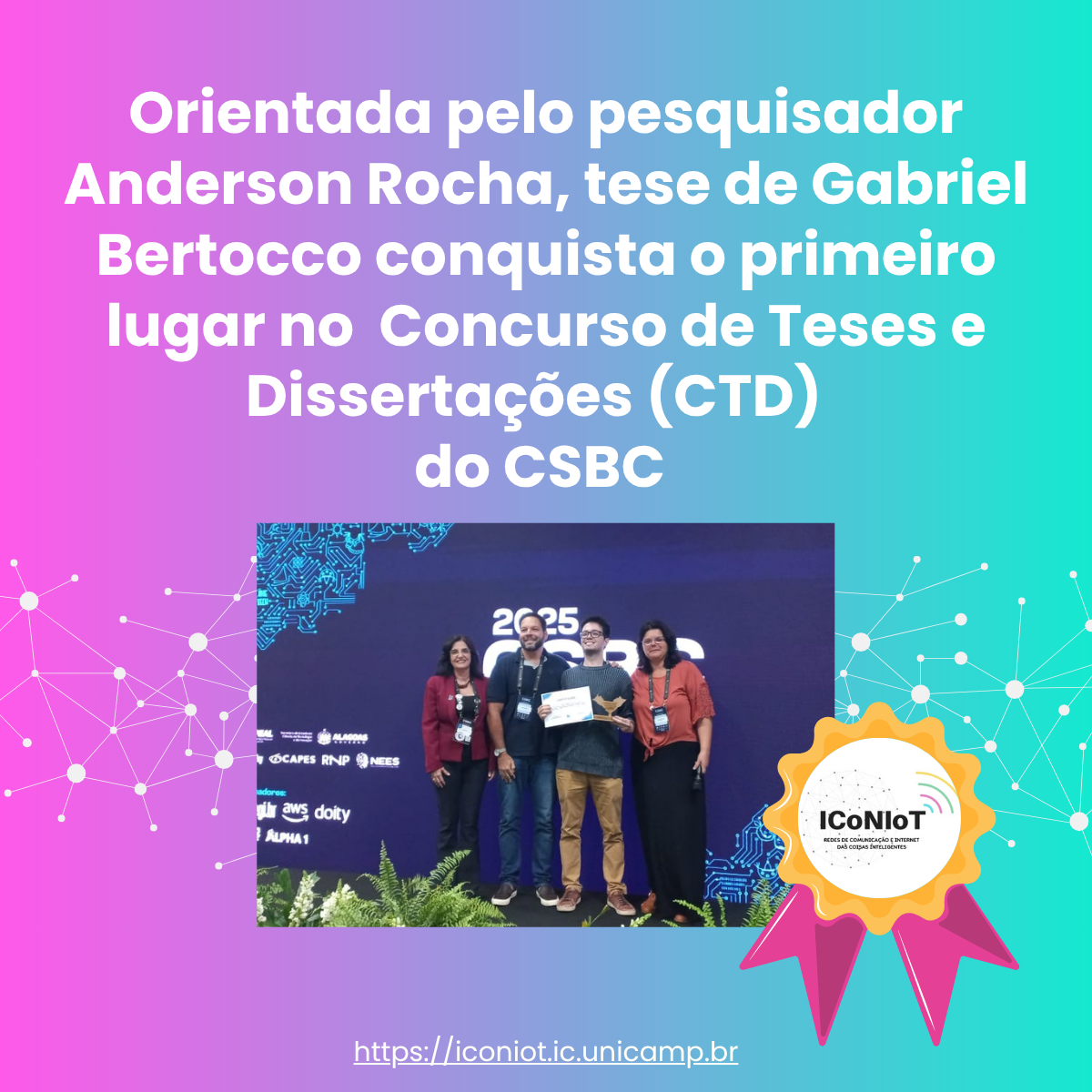


A pesquisa parte da necessidade cada vez maior de redes intraveiculares mais rápidas e flexíveis, como as baseadas em Ethernet automotiva, para interconectar os diversos sistemas existentes nos veículos. Essa conectividade ampliada traz novas possibilidades, mas também levanta preocupações com a segurança cibernética nos veículos. Soluções tradicionais de segurança, como criptografia e autenticação, possuem restrições quando consideradas em um ambiente de recursos limitados como o intraveicular. Diante disso, sistemas de detecção de intrusão (intrusion detection systems, IDSs) surgem como uma linha adicional de defesa, sendo ativados quando outros mecanismos de defesa falham. IDSs monitoram dispositivos e redes para identificar intrusões e reportar atividades maliciosas, além de não exigirem mudanças nas mensagens que os dispositivos já trocam.
Técnicas de aprendizado de máquina (machine learning, ML) e aprendizado profundo (deep learning, DL) têm se mostrado eficazes na criação de IDSs, pois conseguem identificar padrões ocultos em dados de alta dimensionalidade, como o tráfego em redes intraveiculares. No entanto, os modelos de DL geralmente exigem maior poder de processamento e espaço de armazenamento, o que dificulta sua aplicação em sistemas com recursos limitados, como os encontrados nos veículos.
Sendo assim, a dissertação propõe dois IDSs baseados em aprendizado profundo, desenvolvidos para detectar ataques cibernéticos em redes Ethernet automotivas com rapidez e precisão, considerando os recursos e requisitos do ambiente intraveicular.
Receber o prêmio é um motivo de grande celebração, já que o CTD do CSBC é um dos concursos mais relevantes e disputados da área. A premiação contempla todas as sub-áreas da Computação!
Acesse a dissertação – https://lnkd.in/deJZqH-7